How to Overcome Procrastination on a Project You Have Already Started
To overcome procrastination on a project you have already started, you need to do three things: name exactly where the project is stuck, shrink the next action to its smallest possible step, and add external accountability so delay has a cost. Willpower alone is rarely enough. The delay cycle breaks when you change the structure around your work, not just your intentions.
Many freelancers and founders carry a half-finished project for weeks or months. The file is open, the idea is real, and the desire to finish is genuine. But the work does not move. If that describes you right now, this guide is built for you. It focuses on mid-project procrastination specifically, where the problem is not starting but finishing.
You can also read about the weight of carrying unfinished projects and why that weight grows the longer you wait.
Why You Are Stuck Mid-Project (And It Is Not Laziness)
Before you can fix the problem, you need to understand what is causing it. Most people blame laziness. The research says something different.
Procrastination is not laziness. Laziness means you do not care. Procrastination usually means you care too much. The project matters, and that is exactly why it feels hard to touch.
The Four Main Causes of Mid-Project Delay
There are four common reasons a project stalls after it has already started.
1. Fear of the finished result
When a project is unfinished, it is still safe. Nobody can judge it. Nobody can reject it. Finishing makes it real, and real things can fail. This fear is one of the strongest forces that keeps work stuck in the 80% zone. You can learn more about this specific feeling in the goldenweeks post on why you feel so much discomfort before you ship.
2. Loss of clarity about the next step
You started the project with a clear picture. But mid-project, the path gets complicated. When the next step is not obvious, the brain treats the whole project as one giant unclear task. That triggers avoidance.
3. The reward feels too far away
Motivation drops when results feel distant. The brain prefers actions with fast, visible payoffs. A project that will ship in three weeks feels less rewarding than checking email right now.
4. Perfectionism about the remaining work
The early parts of a project feel acceptable. But the closer you get to finishing, the higher your own standards rise. The last 30% becomes the hardest part because it is the part people will actually see. If this is your specific problem, the goldenweeks post on how to finish the last 30 percent of your project and ship it goes deeper into this exact situation.
Mid-Project vs. Never-Started: Why They Need Different Solutions
| Problem type | Main cause | Best fix |
|---|
| Never started the project | Overwhelm, unclear scope | Break it into a first step, set a 5-minute timer |
| Stuck mid-project | Fear of finishing, unclear next step | Audit what remains, reduce the scope, add accountability |
| Restarting an old project | Loss of connection to the goal | Reconnect to the outcome, set a ship date |
| Finishing the last 10% | Perfectionism | Define "done," ship a version 1 |
The table above shows that mid-project procrastination needs specific solutions. Generic productivity advice, like "just start," does not apply when you already started.

Practical Steps to Overcome Procrastination on a Project You Already Started
This section gives you a clear action sequence. Work through it in order.
Step 1: Do a 20-Minute Project Audit
Open the project. Do not work on it yet. Just look at it.
Write down three things:
- What is done.
- What is not done.
- What the actual next physical action is.
The third item is the most important. "Finish the website" is not a next action. "Write the homepage headline" is a next action. Be specific. One task, one action.
This audit takes 20 minutes. It removes the mental fog that causes avoidance. When your brain knows exactly what comes next, it stops treating the project as a threat.
Step 2: Cut the Scope
Look at your "not done" list. Ask: what on this list must be in version 1?
Most stalled projects have grown beyond their original purpose. Features were added. The goal expanded. The finish line moved further away.
Cut anything that is not essential to a working, shippable version. Put the cut items on a separate "version 2" list. This is not giving up. This is making it possible to finish.
A project that ships at 80% of your original plan is worth more than a project that sits at 95% and never leaves your hard drive.
Step 3: Set One Micro-Task Per Work Session
Do not schedule "work on the project" in your calendar. That is too vague.
Schedule one specific output per session. Examples:
- "Write 300 words of the sales page."
- "Record the intro video, unedited."
- "Connect the payment form to the thank-you page."
One task. One session. Done means done.
When you complete a specific task, your brain registers a small win. That win makes the next session easier to start. This is how the delay cycle breaks: not in one big effort, but in a sequence of small completions.
Step 4: Add External Accountability
This step is where most solo freelancers and founders fall short.
When you work alone, delay has no cost. You can move your own deadline without consequence. Nothing forces the work forward except your own discipline, and discipline alone is a weak system.
External accountability changes this. It can be:
- A weekly check-in with another builder.
- A public commitment with a real date attached.
- A paid program or retreat where other people see your progress.
The format matters less than the fact that someone else knows what you committed to finish and when. Studies on accountability consistently show that telling another person your goal increases the probability of completing it.
This is also one of the core reasons goldenweeks exists. It is a 2-week accountability retreat in Zanzibar designed for remote workers and founders who have a stuck or unfinished project. The environment is built for one outcome: shipping. If you are looking for a structured way to overcome procrastination on something real, see what a founder retreat should actually do.
Step 5: Work in the Same Place at the Same Time
Where you work matters. The brain builds habits around location and time. If you always check social media at your desk, your desk becomes a procrastination trigger.
Choose one location for deep work on your project. Work there at the same time each day. After a few sessions, the location itself becomes a cue to focus. This is not magic. It is habit formation. It takes 5 to 7 sessions to feel a noticeable difference.
Step 6: Define What "Done" Means, Today
"Done" is one of the most important words in any project. If your definition of done keeps changing, the project can never be finished.
Write down one sentence that completes this: "This project is done when ..."
Make the sentence specific. Include a date. For example: "This project is done when the landing page is live and accepting signups, by August 30."
Once you write it, stop changing it. Every decision after that point should be measured against this one sentence.
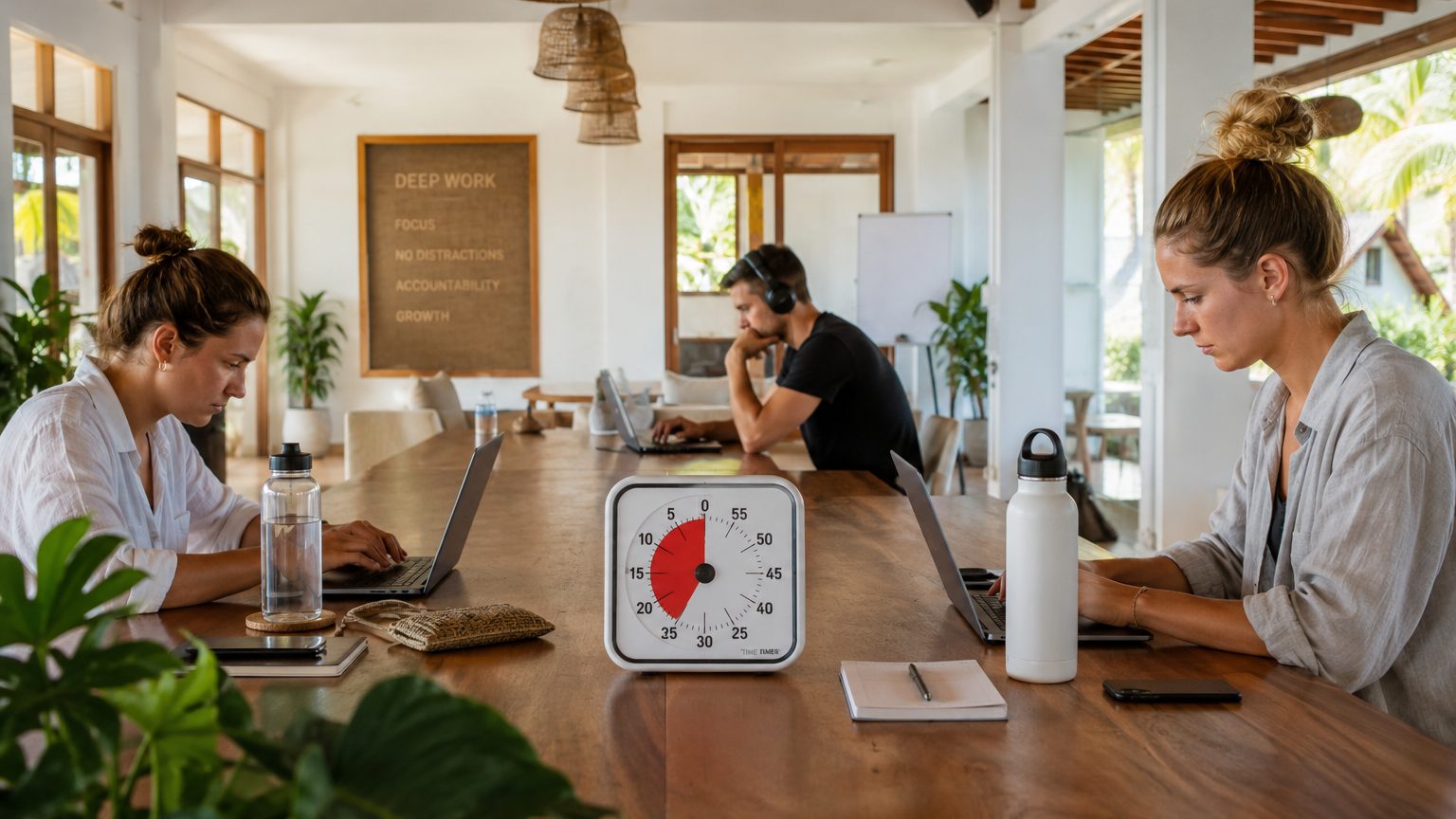
The Accountability Environment: Why Location Changes Everything
A stalled project often needs more than better habits. It needs a different environment.
Working alone, in the same place, with the same distractions, tends to produce the same results. When you change the environment, you change what the brain expects from a work session.
This is one reason why many founders and freelancers use retreats or co-working stays to push through a stuck project. A new location, surrounded by other people who are also building, removes the low-cost option of delay. If you are curious about digital nomad productivity and how environment affects output, that post covers the topic in detail.
Zanzibar, specifically, offers fast internet, affordable living, and a growing community of remote workers. If you want to know whether it is a practical base for focused work, is Zanzibar good for digital nomads answers that question directly.
FAQ
How do I overcome procrastination when I have lost interest in my project?
Loss of interest mid-project is common. Start by reconnecting to the original reason you began. Then reduce the scope to the smallest version you can ship. Finishing something you no longer love is still more valuable than leaving it unfinished, because shipping builds the habit of completion.
Is procrastination on a project a sign that I should quit it?
Not usually. Procrastination most often signals fear of finishing or a lack of clarity about the next step, not a sign the project is wrong. Before you quit, do a 20-minute audit and try one focused work session with a specific output. If the project still feels wrong after that, then reassess.
How long does it take to break the procrastination cycle on a stalled project?
Most people feel a shift after 3 to 5 consecutive focused sessions. The key is making each session short, specific, and completable. One small win per session is enough to rebuild momentum. The first session is always the hardest.
Does working with other people actually help with procrastination?
Yes. External accountability is one of the most reliable tools for overcoming procrastination. When another person knows your commitment and deadline, delay has a social cost. This makes follow-through significantly more likely than working in complete isolation.
Final Thoughts
Knowing how to overcome procrastination on a project you have already started is a specific skill. It is different from learning how to start something new.
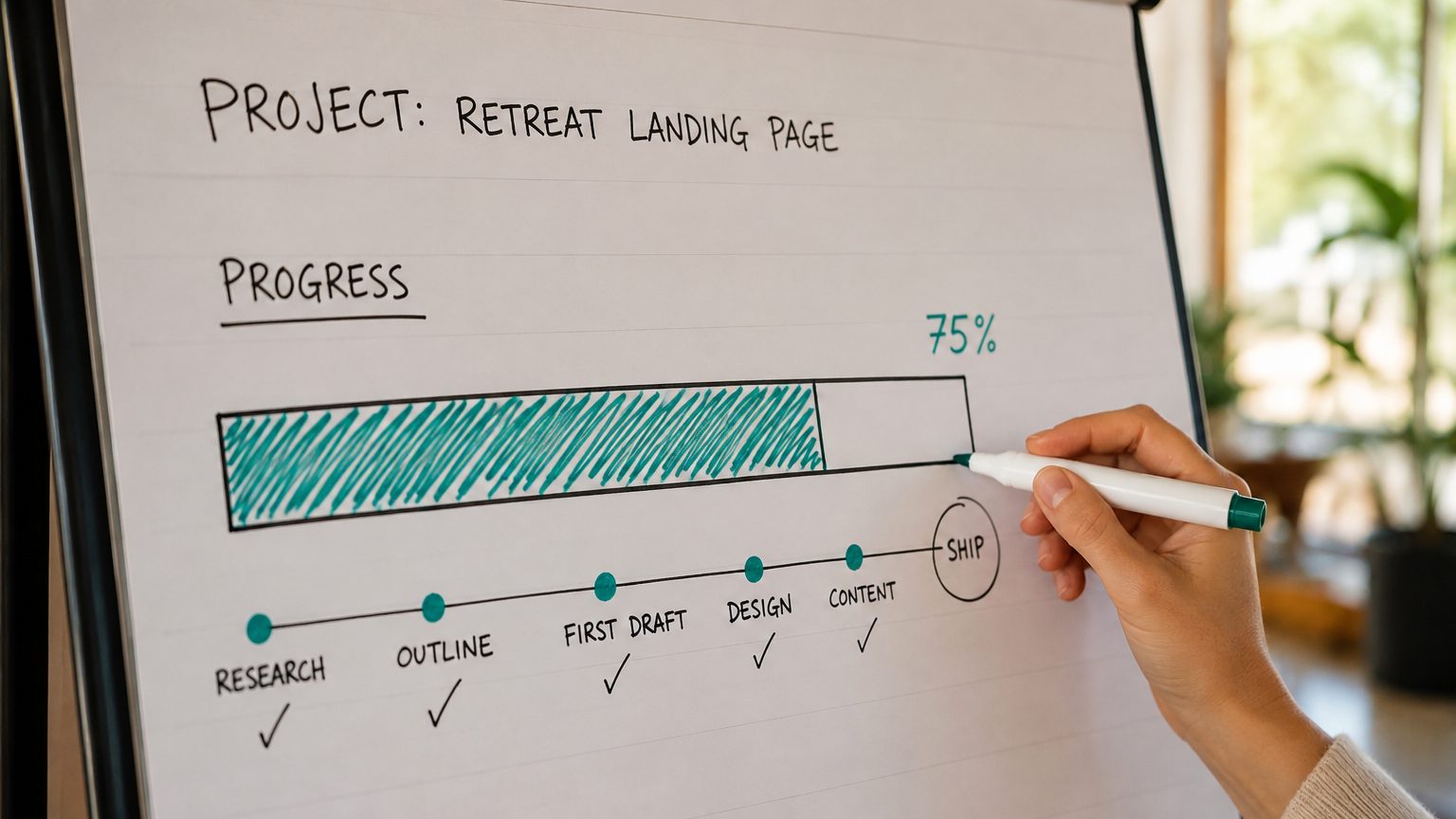
The steps are clear: audit what remains, cut the scope, define one next action, add accountability, and protect your work environment. None of these steps require a perfect mindset or a surge of motivation. They require structure and follow-through.
The longer a project sits unfinished, the harder it feels to return to it. Each week of delay adds psychological weight. The project starts to feel bigger and more complicated than it really is.
The fastest way to break this is to take one concrete action today, not tomorrow, not next week. Open the file. Write the next sentence. Record the rough version. Ship the first draft.
Finished work, even imperfect finished work, always beats unfinished work waiting for the right moment.
If you want to do this inside a structured environment with other founders and remote workers who are building the same way, goldenweeks runs 2-week accountability retreats in Zanzibar for exactly this. Learn more about what the retreat is designed to produce at what a founder retreat should actually do.